Lutheran Social Services of Maryland
The year was 1913. Aware of the successful social ministry being provided by the Lutheran Inner Mission Society in Philadelphia, officials of the The Baltimore Lutheran Motherhouse and the Baltimore Lutheran Ministers’ Association came together to hear of the work in Philadelphia conducted by the Rev. J. Franklin Ohl, D.D., Philadelphia “city missionary.”
Just one month later, in November, 45 people assembled in the lecture room of First English Lutheran Church at Lanvale and Fremont streets in Baltimore to organize and adopt a constitution for “The Inner Mission Society of the Evangelical Lutheran Church of Baltimore and Vicinity.” Its goals included… “to encourage works of mercy in our Lutheran congregations… to endeavor to bring the Gospel and the ministration of Christian love to those not now reached by churches, and to cooperate with such institutions and agencies among us already engaged in Inner Mission work, and to undertake new Inner Mission activities as may suggest and demand…”
So began the long history of Lutheran social ministry in central Maryland and beyond.
Among the Inner Mission Society's first services were a Baltimore-based city missionary (the Rev. Frederick W. Meyer, also known as the Inner Mission Society’s superintendent), who assisted congregational pastors with visitation to people in hospitals, orphanages, and prisons (as well as a tuberculosis sanatorium). The organization soon developed a Christian home for young single women living in Baltimore (see the TimeLine 1918 link under TimeLines).
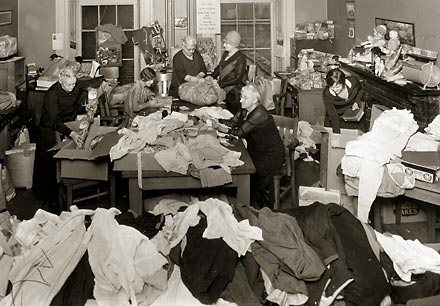
Based on a congregational-membership model, the Inner Mission Society had, by its 50th anniversary in 1963, 17,000 individual members. By then, the agency had been renamed Lutheran Social Services of Maryland, Inc.
LSS programs included meals on wheels, Lutheran Employment Training Services (LETS), counseling, emergency aid/information and referral services, a “handyman” program, housing services, and in-home care. In fact, in the 1960s LSS of Maryland achieved recognition for unique program development, leading the nation with the first institutional meals on wheels program, as well as the first “Mobility System” providing escorted transportation for the elderly and disabled.
In 1994, LSS of Maryland became a subsidiary of Tressler Lutheran Services. LSS had worked with Tressler over the years, primarily in the area of children’s services. The new Tressler Lutheran Services of Maryland, Inc., began to manage the Good News Children’s Day Care Center, begun earlier by Tressler to serve families in the inner city. That service was continued by Diakon KidzStuff at Diakon Place in East Baltimore, though that program was eventually transitioned to another provider. Among other Tressler Lutheran Services of Maryland programs were LETS and in-home care.
Three years later, the board of directors of Tressler Lutheran Services of Maryland, Inc., voted to merge with Tressler, shifting the Baltimore operation into Tressler Lutheran Community Ministries–Baltimore, predecessor of today’s Diakon presence within the city. Regional programs have since expanded to include adoption services and housing and community development.